 For generations, Indian families have saved in gold the same way: a necklace for a wedding, bangles at Dhanteras, a coin for a newborn. Gold has been savings, insurance and heirloom at once. That habit hasn’t faded. The World Gold Council estimates that Indian households hold more than 31,000 tonnes of gold, one of the largest private stores of the metal anywhere in the world. What is changing is the form that gold takes, and who can afford to own it.
The old economics: jewellery as savings
Jewellery has always been an expensive way to save. Making charges, often 8–25% of the gold value, are lost the moment the ornament leaves the shop. When it is sold or exchanged, most jewellers pay only for the metal weight at that day’s rate, often after a deduction for wastage. On top of that, GST of 3% is charged on the entire bill, making charges included. Purity depends on trust in the local jeweller, and safekeeping means a steel almirah at home or a bank locker that many rural families don’t have.
Then there is ticket size. Even after recent falls, 24-carat gold costs well over ₹12,000 a gram. That puts even a single gram out of reach as one purchase for a daily-wage earner, a small farmer or a kirana owner. For millions of the households FIA Global serves, gold has become something to aspire to rather than something to accumulate.
What has changed
Three shifts are reshaping how India owns gold.
Price: Gold’s sharp rise through 2024, 2025 and early 2026 has pushed buyers toward lighter jewellery and lower carats. According to the World Gold Council, India’s jewellery demand fell 20% by volume in the July–September 2026 quarter, even as spending on jewellery rose in value. Yet families are not selling: recycling of old gold remained muted. The appetite for gold is intact; the way of buying it is changing.
Payment rails: UPI has made small, frequent payments part of everyday life. According to NPCI data, digital gold purchases through UPI rose from about ₹762 crore in January 2025 to ₹3,926 crore in January 2026, and crossed a record 254 million transactions in March 2026. The World Gold Council estimates that Indians bought more than 12 tonnes of digital gold in 2025.
Fewer simple options: Sovereign Gold Bonds, once the government-backed route to paper gold, have seen no new issue since February 2024. Gold ETFs are growing, but they need a demat account and a level of market familiarity that the last mile often lacks. For small, regular savings, digital gold has filled the gap.
Digital grams: Gold in Sachet Size
Digital gold turns a gram costing over ₹12,000 into something you can buy for ₹10. Each purchase is backed by physical 24K, 999.9 purity gold held in insured vaults in the customer’s name. It can be sold back at live prices or, once enough has accumulated, redeemed as coins and bars. Customers still pay 3% GST and a buy–sell spread, but there are no making charges, no purity doubts and no locker to arrange.
This is the same principle that has driven financial inclusion elsewhere: break a large financial product into sachets that fit the cash flows of ordinary households.
Why trust matters, and where it is still being built
Digital gold is not yet a regulated financial product. In November 2025, SEBI cautioned that it falls outside its purview. Since then, the industry has formed a self-regulatory body, the Digital Precious Metals Assurance Council of India, and the government is discussing physical-backing rules and joint RBI–SEBI oversight.
Gold prices also move both ways, and they have fallen sharply in recent weeks. Swings like these are one reason small, regular purchases can suit households better than a single large one: they spread the buying price over time.
That is why the provider matters. FIA Global offers digital gold in partnership with MMTC-PAMP, a joint venture between MMTC Ltd, a Government of India undertaking, and Switzerland’s PAMP, with an independent trustee overseeing the gold held for customers. MMTC-PAMP is also a member of the Digital Precious Metals Assurance Council of India.
The last-mile agent: a trusted face for digital gold
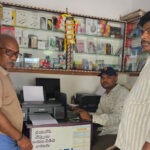
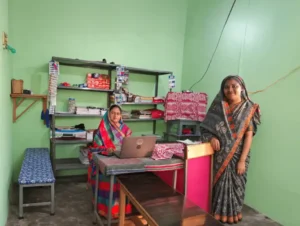
Technology alone doesn’t change savings habits in a village; people do. For generations, the local jeweller was the trusted face of gold. Today, that role can be played by the neighbourhood agent a family already knows and visits for everyday financial needs: paying a bill, recharging a phone or sending money home.
Across FIA Global’s network of 65,000 agents, a third of them women, these agents can:
- Explain it plainly: Real 24K gold, held in insured vaults and priced daily. It is not a deposit and not a guaranteed return.
- Help with the first purchase: Customers can start with as little as ₹10 on FIA Global’s platform.
- Offer an optional round-up: A ₹90 bill payment rounded up to ₹100 can put ₹10 into gold, if the customer chooses.
- Match savings to income cycles: Help set up small, regular purchases timed to harvests, wages or pensions.
- Make progress visible and support the exit: Show balances in grams, and guide sell-back when a family needs cash, or redemption when they want a coin for a wedding.
Every purchase is the customer’s own decision, made separately from any other transaction and confirmed with a receipt that shows the grams credited. Small amounts, chosen freely, become a habit: ₹20 a day adds up to more than ₹7,000 a year, without asking anyone to give up their daily needs.
From inclusion to well-being
Gold ownership in India is moving from occasional, costly and home-stored to continuous, fractional and vaulted. The desire for gold hasn’t changed; the barriers to owning it have started to fall. For FIA Global, offering digital gold through trusted last-mile agents is a step from financial inclusion to financial well-being, helping households that have always trusted gold to own it in amounts that fit their income.
Be the trusted face of gold in your community. To become a digital gold agent with FIA Global, write to us at [email protected].
Want to see what else you can offer your customers? Know more about our services.
Disclaimer: Digital gold is not regulated by SEBI or RBI. Gold prices can go up or down, and returns are not guaranteed. Please understand the product before you buy it.